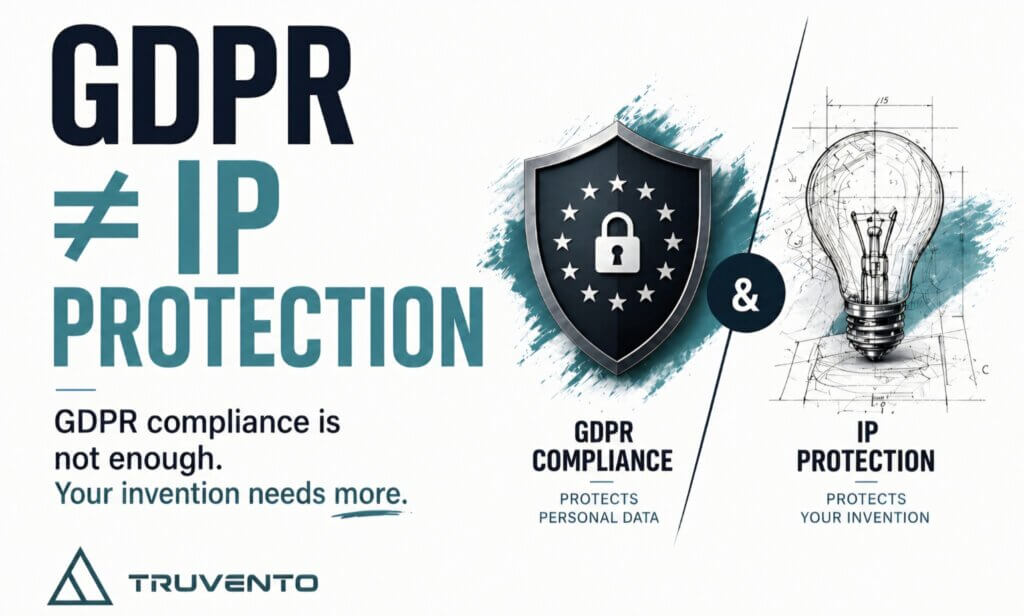
In conversations with patent attorneys and in-house IP teams, the same pattern keeps emerging:
AI tool evaluations typically focus on:
→ GDPR compliance and data processing agreements 📄
→ Server location for personal data 🌍
→ Standard confidentiality clauses 🔐
These are essential – but they address only one category of risk.
🔍 In IP work, the most sensitive information is rarely personal data.
It is the invention itself.
An invention disclosure.
A patent application draft that has not yet been filed.
If this kind of information is used – even inadvertently – to train, fine-tune, or evaluate a large language model, the implications go beyond data protection law:
→ Potential loss of novelty ⚠️
→ Compromised confidentiality before filing
→ Erosion of competitive position 📉
It is worth noting that many general-purpose AI providers reserve the right to use customer inputs for model improvement, evaluation, or benchmarking, unless specific enterprise terms are in place. For most use cases, this is acceptable. However, this is not the case for invention details💡.
🔐 This is why TRUVENTO works exclusively with infrastructure providers who contractually guarantee:
✔ No use of customer data for model training
✔ No use of customer data for evaluation or benchmarking
✔ No transfer of customer data to third parties
For us, GDPR compliance is a baseline requirement. The protection of invention data is a separate – and, in our view, equally important – standard.
We would be interested to hear how patent attorneys and in-house IP teams are currently approaching this question internally. It is a topic that, in our experience, deserves more structured discussion than it currently receives.
🌐 More on our approach: www.truvento.de